Sunday, August 31, 2014

New York City- Food Edition

Coming from a family of self-proclaimed food aficionados, it would be unheard of to visit New York City without venturing into the many eateries that scatter the city. My family is known to plan our restaurant visits months in advance, and one of our favorite topics to discuss is what to eat for our next meal. We don't all share the same features or personality traits, but one thing that is uncanny in our family of four is our bodily response when we see good food- eyes wide open, transfixed on the plate being set on our table; noses twitching, sniffing vigorously like a canine detecting its' favorite treat; mouths salivating; and of course, hands ready to whip out our phones to take a picture of the delectable dish set in front of us. During my visit to New York City last week, I went to various restaurants, bakeries and delis to sample the unique dishes that New York has to offer.

Dominique Ansel Bakery
Nestled in Soho's Spring street, Dominique Ansel Bakery has been known to start various food trends, such as the "cronuts" and "cookie shots". I had heard stories of people lining up at the wee hours of dawn to sample some of Dominique Ansel's famed "cronuts" (a portmanteau of croissants and donuts), yet I never had the opportunity to try them myself. Unfortunately, the cronuts had all sold out by the time I arrived at the bakery, so I took the opportunity to try some of his other creations.

DKA
DKA stands for Dominique's Kouign Amann, a flaky croissant-type pastry covered with a caramelized crust. My mother's favorite pastry at the bakery, the DKA has just the right balance of flaky and soft, and the flavors were rich yet not overbearing.

Cookie shots
We had arrived at the bakery at around 2:30, and decided to stick around until 3 in order to line up for the Cookie Shots. There is a quota as to how many Cookie Shots each customer can buy (2), and for good reason. The line grew long, fast. The Cookie Shot is certainly a novel creation- it's a chocolate chip cookie moulded in the shape of a shot glass, with a layer of milk chocolate on the inside. To top it off, vanilla milk is poured into the shot glass. This was my favorite dessert at the bakery- although the cookie itself tasted like a lot of other chocolate chip cookies I had tried before, the vanilla milk was extraordinarily rich, and the chocolate layer within the "shot" really contributed to the richness of the flavor.

Frozen S'more
Once again, like all of Dominique's other creations, the Frozen S'more is undoubtedly a novel idea. It's a dessert with a custard ice cream center, covered with chocolate wafers and frozen marshmallow concoction. I'm telling you, I am known to have a sweet tooth. However, this dessert was far too decadent and sweet. I definitely would not be able to finish a whole Frozen S'more by myself, although I wouldn't mind sharing it with someone else just to have a small bite of it.


Mercer Kitchen
By far one of my favorite restaurants in New York, Mercer Kitchen is one of acclaimed chef Jean-Georges' many restaurants. The ambiance and decor of Mercer Kitchen is full of character- the exposed brick walls, rustic "skylight", and open kitchen set a nice mood. Jean Georges is actually married to a Korean woman, hence I found that a lot of menu items fused both Western and Asian influences and ingredients.

Sweet Pea Soup
The Sweet Pea Soup was nothing special- it didn't have any interesting flavors or a unique texture; it was simply a good, typical sweet pea soup. The texture was creamy, the croutons crispy, and the soup hot- exactly like a standard sweet pea soup should be. There definitely wasn't any wow factor with this dish.

Tuna Spring Roll
One of my favorite dishes of the day, the Tuna Spring Roll was crispy, flavorful and unique. It is a piece of tuna sashimi with a flaky wrap and soy bean puree on the side. The sauce on the side complemented the tender, juicy sashimi perfectly. The texture and taste of the dish easily rendered it the winning dish of the day for me.

Salmon with Crispy Rice
Another one of the dishes with an Asian twist, the Salmon with Crispy Rice came a close second for the title of the day's winning dish. The tenderness and juiciness of the salmon juxtaposed with the crispiness of the rice made for an extraordinarily distinctive dish.
Schaller and Weber Hot Dog 
Yet another dish with an Asian fusion twist, the Schaller and Weber Hot Dog has Kimchi relish scattered on top of the Schaller and Weber sausage. The fries were crispy and had just the right amount of salt and seasoning, while the hot dog itself tasted good. The Kimchi really helped neutralize the "heaviness" of the sausage dish, although it was a tad too sour (perhaps it wasn't fermented enough).


ABC Kitchen
Yet another one of Jean-Georges' restaurants, ABC Kitchen is located near Union Square. The restaurant has a rustic, minimalistic atmosphere and decor that made it seem like a very trendy, fun place to eat lunch with friends on a Sunday lunch.


Crab toast
The crab toast is simply pieces of toasted bread topped off with lemon aioli and shrimp. The shrimp was succulent, juicy and fresh. It was a great flavorful starter that got our tastebuds excited for the meal to come.


Calamari
The two sauces that came with the calamari were great- one was zesty (the marinara sauce) and one was creamy and rich (the mustard aioli). The calamari itself was fried perfectly on the outside and juicy on the inside, and it had just the right level of seasoning.


Squash pizza
According to the waiter, the squash pizza is one of the most popular dishes at ABC Kitchen. Although it was a new flavor pairing that my palate was not familiar with, I ended up enjoying it tremendously. One gripe that I have about the pizza was that the dough itself was rather soggy and didn't have the sort of crunchy texture that I like in a pizza.

Kasha and bowtie pasta
The Kasha and bowtie pizza came with small veal meatballs. Although the pasta was cooked well, the actual sauce was slightly too salty for my family's palates. Would likely not try again.

Lobster
My sister and my father are huge lobster lovers, hence it was no surprise that they wanted to order the lobster dish. The lobster was succulent, juicy and moist, while the seasoning on the lobster was flavorsome.

Salted caramel ice cream sundae
Once I saw this on the menu, I knew that I absolutely had to order it- it was a combination of a few of my favorite things- ice cream, caramel and popcorn. This really was the highlight of my meal (my sweet tooth is still apparent to this day), and tasted absolutely decadent. The popcorn was crunchy and sweet, and the contrast between the creaminess of the ice cream and the crunchiness of the popcorn really made the dessert all the more delicious.


Nobu Next Door
One of the many Nobu restaurants located around the world, Nobu Next Door is located in Tribeca, and offers many novel Peruvian-Japanese dishes. This is one of my family's favorite restaurants, as their flavor profiling really matched our family's preferences in food.

Breakfast Tacos
A blend of Mexican and Japanese cuisine, these tacos are composed of washu, quail egg, onion and aji amarillo. My mother has a relatively weak stomach- she finds certain foods very "heavy" and greasy easily and simply doesn't eat them. Normally, tacos are one of them. However, these tacos were light and fresh, and were a hit at our lunch table.

Nobu tacos
I actually preferred these Nobu tacos to the Breakfast tacos. Mine had lobster in it, while the other two had crab in them. These simple tacos tasted very fresh, and the sauce was brilliant- my father actually spooned some onto his plate and dipped a lot of the other dishes in it. 

Bagel and lox
The bagel and lox is simply salmon placed on top of a crispy rice "bagel". The contrast between the two textures- the crispy rice and the smooth salmon- worked harmoniously, and I would definitely try these again.

Crispy rice with spicy tuna
These crispy rice cubes can be dipped into soya sauce, and then topped off with spicy tuna. The waiter told us that this was one of their signature dishes, and although I liked it, it wasn't something that I would actively seek out to eat. 

Salmon
The salmon was drenched in miso sauce, and was topped off with various thinly sliced vegetables. Overall, I really liked this dish. It was moist and flavorful, and overall I think that miso goes well with various fishes.

Lobster and "Grits" Soba, Poached Egg, Maine Lobster, Truffle
This was my favorite dish of the day. I loved Nobu Next Door's innovative take on traditional soul food. The grits tasted absolutely delicious- I wasn't sure what exactly they were made of, but I liked the gritty texture of it, as it complemented the other components of the dish very well.

Gaonnuri
Located on the top of a commercial building in K-Town, Gaonnuri is a trendy, modern and eclectic Korean restaurant that boasts an impeccable view. The second I stepped out of the elevator, I was greeted with white traditional Korean pots that hovered over the bar. As we walked into the main dining area, I was in awe over how stunning the view of the city was. It was then that I decided that I loved the New York skyline much more than the Hong Kong skyline. 

The beef at gaonnuri was okay, but it wasn't (understandably) as tender as the KBBQ beef that you can get in Korea. My parents told me that if you order yangnyum galbi, the seasoning can mask the mediocrity of the beef quality. Hence, we decided to order more yangnyum galbi than just plain, unseasoned gogi (that you dip into sauce). Overall, the food was good, not great. However, I would go back just for the view and the decor.

Umami Burger
Umami Burger rose to popularity in 2013 for its' signature truffle burgers. Since we were only in New York for a week, we had to choose between Umami Burger and the cult-classic burger restaurant Shake Shack. However, seeing as we had tried Shake Shack in New York numerous times before, we decided to see what the hype around the Umami truffle burger was all about. The restaurant resembled a classic, all-American diner, while the waiters and staff were extremely attentive and friendly. What I found really unique about Umami Burger was that their drink choices were really interesting- instead of the standard Coke, Sprite and Fanta, they had Mexican Coke (which is said to be tastier as it is sweetened with cane sugar) and other drinks that I had neither seen nor tasted before. 

Umami Burger 
All of the burgers at Umami Burger are stamped with their insignia- the letter U. The Umami Burger was juicy, tender and and meaty- all the characteristics that I like in a burger.

Truffle Burger
Since we had come to Umami Burger specifically for the truffle burger, I had high hopes for this dish. Like the original Umami Burger, the meat was tender and juicy, and the truffle flavoring was aromatic and strong. I really liked the flavor pairing of truffle with cheese and meat. The burger really lived up to its' hype!


Tuesday, August 12, 2014

Macau

One of the two Special Administrative Regions of China (the other being my hometown Hong Kong), Macau is situated on the southeast coast of China. A city known for its casinos and lavish hotels, it is often regarded as the "Las Vegas of the East". Having lived in Hong Kong for over 17 years, I have visited Macau multiple times for day visits. Although it shares some similarities with Hong Kong, it has a unique nuance that masterfully blends both the Eastern and Western influences that have permeated its' history.

How to get there:
In order to get to Macau, my family and I took the Cotaijet Ferry, which runs between the Taipa ferry terminal in Macau and the Hong Kong-Macau ferry terminal in Sheung Wan, Hong Kong. Since the Cotaijet Ferry operates high speed catamarans, the journey to Macau typically takes only about an hour. Although for the most part, the ride remains bump-free, if you do have a tendency of getting seasick, try to buy acupressure bands in Watson's or Mannings. There is also an airport in Macau, but the standard journey to Macau is through ferry via Hong Kong.

Places to visit:
City of Dreams Macau- The House of Dancing Water
During my last visit to Macau, my family and I went to the City of Dreams, an entertainment complex that houses various hotels, restaurants, shops and casinos. We watched The House of Dancing Water, which is a show similar to Cirque du Soleil's "O" show. I came to find out that this show is directed by Franco Dragone, one of the original creators of Cirque du Soleil. The show was truly thrilling, with amazing dives, world-class acrobats, a beautiful set, great ambiance and even a motorbike show that drew multiple "oohs" and "ahhs" from the audience. It was definitely the highlight of my trip, as I was kept on my toes at all times.


The Ruins of St. Paul
An icon of Macau, the Ruins of St. Paul is a beautiful piece of architecture that overlooks the Rua de Sao Paulo. Originally built in the 16th century, this Jesuit church was destroyed in a fire (for the 3rd time!) after a typhoon swept across Macau in 1835. All that remains of this Church is the beautifully carved four story facade which depicts both Western and Eastern design elements.    

A Ma Temple
A Ma Temple is the oldest in Macau, and has a fascinating story to go with it. Legend goes that the name "Macau" was actually derived from this temple. When Portuguese explorers arrived on the island many centuries ago, they asked the locals for the name of this island. However, the locals misunderstood their question, and assumed that they were asking for the name of the temple, "Ma Ge". The Portugese then translated this to "Macau", thus giving an origin to this name.

This temple is dedicated to Matzu, a sacred goddess of seafarers. There are varying tales of Matzu, such as the tale of how she saved her father while he was at sea after she fell into a trance.

Side note-
The city is much more vibrant during Chinese New Year. However, it can be crowded so brace yourself. 

Things to eat:
Lord Stow's Bakery- Egg tarts
This famed bakery is known for creating the "egg tart", a dessert whose Portuguese influences have proved very popular in Hong Kong and Macau. Its creamy custard-like inside and crispy golden brown pastry is something that I personally look forward to every visit. Although they have a few stores in Hong Kong, the original bakery can be found on Coloane Island in Macau. My family and I always make sure to stop by the bakery before leaving Macau to bring fresh egg tarts back home.

Pork Chop Bun- Street vendors
These decadent buns are both crisp and soft, and contain a fried pork chop and lettuce sandwiched between two bread slices. The bread is a type of bread popular in Hong Kong and Macau and resembles a baguette. Don't let the simplicity of the dish fool you- it's a snack that truly isn't famous for no reason.

If you're in both Macau and Hong Kong, I would recommend saving the Dim Sum for your meals in Hong Kong, and trying out some authentic Portuguese food whilst in Macau. My family and I ate at a small Portugese restaurant that served food bursting with flavor and color. However, other restaurants that are famous in Macau include Antonio's and Fernando's.

Key phrases:
The official languages of Macau are Portugese and Chinese. I found that most people, like in Hong Kong, speak Cantonese. Here are a few key phrases to use:
Hello: Lay ho
Goodbye: Joy geen
Thank you: M goy
Yes: Hai
No: M hai
Where is the bathroom?: Chee soh hai bin do ah?


Wednesday, March 26, 2014

Suwon, Korea

Dubbed "The City of Filial Piety", Suwon is a city that boasts a rich cultural history and is home to landmarks such as the UNESCO World Heritage site "Hwaseong Fortress" and the 2002 World Cup Stadium. Located just about 20 miles from Seoul, Suwon is the capital of Gyeonggi-do, Korea's most populous province.

History:
Suwon is a city with a rich history that spans thousands of years. The most notable era from Suwon's history is that of King Jeongjo and the building of the Hwaseong Fortress. King Jeongjo, the 22nd king of the Joseon dynasty, ordered the construction of the Hwaseong Fortress in memory of his father. It is said that he made numerous pilgrimages every year to his father's tomb, and to this day, King Jeongjo is remembered for his devotion to his parents. This devotion led to Suwon city's nickname of "Hyowon", which, roughly translated, means "the city of filial piety".

Although the majority of the fortress was heavily damaged during the Korean War, most of the fortress was rebuilt years after. The restoration work was done twice and abided closely by the "Hwaseongsungyeokeuigue", a book published during the Joseon dynasty that kept records of the construction of the fortress. Thus, the fortress is a faithful reconstruction of the original fortress. In 1997, the fortress was selected to be on UNESCO's World Heritage list.


Sights:

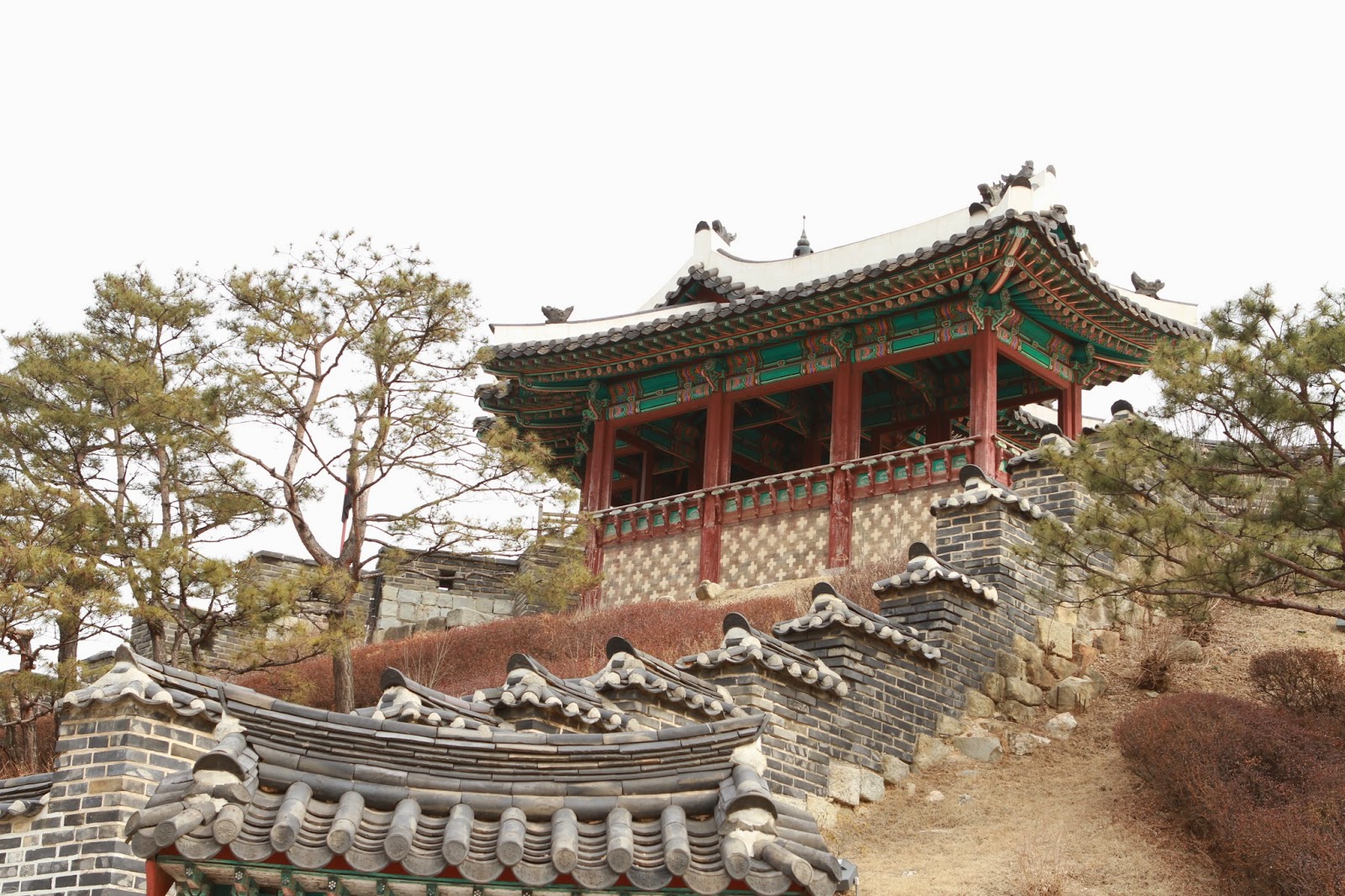
Suwon Hwaseong Fortress & Hwaseong Haenggung
The Suwon Hwaseong Fortress was built by King Jeongjo in the late 1700's out of filial duty to his father, Crown Prince Jangheon. The Fortress is approximately six kilometers (around four miles) long, and features characteristics that make it unique from other standard fortresses. The Fortress has four main gates, each facing the four cardinal directions- north, south, east and west. Since the Fortress is so great in size, the best way to experience the Fortress is to utilize the trolley tour, which brings you around the Fortress in a matter of minutes. The Fortress is valued for its unique features- for example, one key feature of the fortress that shows the innovativeness and novelty of its design is the semicircular brick walls that surround the gates, which once enabled the guards to recognize and prevent attackers from entering the fortress. An interesting attraction in the middle of the Suwon Hwaseong Fortress is the archery range, where vistors can try their hand at traditional Korean gukgung archery.

(Above: Hwahongmun//North watergate)
(Above: Gong Shim Don//Northwest observation tower)
(Above: The wall)

 (Above: Gong Shim Don//Northeast observation tower)

(Above: The trolley used for the tour)

Within the Fortress lies Hwaseong Haenggung (which translates to 'temporary palace'), a palace that King Jeongjo stayed in when visiting his father's tomb. The palace was also used to host King Jeongjo's mother's 60th birthday party and the national exams. It is the largest Haenggung in Korea, housing around 600 rooms. Outside the palace gates at 11:00 AM and 3:00 PM, you can watch the exhilarating "24 Martial Arts Trial Performance", a performance that demonstrates various forms of traditional martial arts.
(Above: Gates)

(Above: Model of King Jeongjo's mother's 60th birthday celebration)


Suwon Museum of History
The Suwon Museum of History provides history and engineer buffs with various exhibitions that display relics, displays and dioramas of the various eras of Suwon history. The museum offers information regarding the prehistoric era to the Joseon dynasty and from modern Suwon to Suwon in the 60's.

World Cup Stadium
The stadium which housed the 2002 FIFA World Cup, the Suwon World Cup Stadium, opened in May of 2001. Its unique architecture, inspired by the image of a flying bird, led to the stadium's seemingly bizarre nickname "The Big Bird Stadium". In addition, its seat designs were inspired by the famed Hwaseong Fortress, adding a touch of traditional Korean detail to the otherwise modern stadium. Within the stadium, there is a small museum (dubbed the World Cup Memorial Hall) dedicated to the 2002 World Cup. Since the 2002 World Cup, this stadium has been the home of the Suwon Samsung Bluewings- a team that boasts a relatively successful history in Korean soccer.
                                                      (Birds eye view image from here)


KBS Suwon Center
For those who are interested in Hallyu and Korean dramas, the KBS Suwon Center offers tours around the outdoor sets where several Korean dramas are filmed. Among the stops on the tour are the makeup room, drama gallery, studio and open set.


Food:
Galbi
Suwon is famous for its Galbi, a Korean short rib dish marinated with garlic, sugar and soy sauce. Suwon's Galbi differs from traditional Korean Galbi in that people in Suwon use salt instead of soy sauce to marinate the rib. Suwon has hosted the annual Suwon Galbi festival since 1995, attracting tourists and foodies wanting to taste Suwon's famous beef dish.

So why is the Galbi in Suwon renowned? The story goes that when King Jeongjo built the Hwaseong Fortress, he needed food and crops to feed the soldiers stationed there. To do so, he gave out seeds and cows to farmers, and decreed that farmers were required to pay back one cow every three years. Thus, as the number of cows and the cow industry in Suwon grew, the beef dishes of Suwon developed as well.  

Although Galbi restaurants are ubiquitous in Suwon, some of the most renowned restaurants are Kabojung Kalbi and Bonsuwon Galbi.

Basic phrases:
Hello- 안녕하세요 annyeong hasaeyo

Thank you- 감사합니다 gamsa habnida

Bye- 안녕히가세요 annyeong hee gasaeyo

Sorry-죄송합니다 jue song hab ni da

Excuse me- 실례 합니다 shil leh hab ni da

Wednesday, February 5, 2014

Revisit to Phuket

I recently returned from a short stay at Phuket, Thailand. During the four days that I was in Phuket, my family and I went on plenty of gustatory adventures, sampling food from local restaurants as well as famed seafood restaurants. I was also reminded of the hospitality and friendliness of the Thai people- something very rare in the hectic nature of this modern age.

Upon our arrival, we were greeted by a spectacular sunset with hues of blue, purple, yellow and orange.
Below: An image of the sunset on the day of arrival


That night, we ate at the resort's Thai restaurant, selecting our favorite traditional Thai dishes that ranged from pad thai to khao phat. What's interesting about certain Thai dishes is that they are so universal that they can be found in a Michelin star restaurant to sold by a street vendor. The restaurant served authentic Thai cuisine full of spice and flavor.

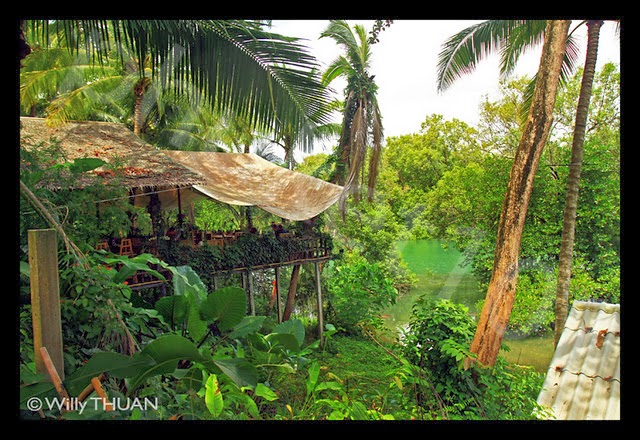
For a family full of foodies, venturing into more local restaurants was a must. We decided to visit Kin Dee restaurant, a restaurant situated just about 20 minutes from the resort. Kin Dee is unlike any other restaurant that you may find in your typical city. The restaurant is actually in an outdoor space in something that resembles a large hut situated right next to the river. The traditional charm of Kin Dee enables you to feel like you're not merely experiencing tourist spots, but truly experiencing Thai culture.  Since we ate dinner there, we were able to witness the sunset. Kin Dee's chef used to work at the Thai restaurant at the resort that we have stayed at since I was younger, so it was great to be reunited with the dishes and cooking that I looked forward to eating every year as a child. We were also told that all the ingredients used by Kin Dee were local produce, so as to generate income for the local farmers. All of the dishes available at Kin Dee were traditional Thai dishes, ranging from sea food to noodles. My favorite dish was Kin Dee's spin on my personal favorite- calamari. They infused Thai spices into the dish that created a distinctively Thai taste to the traditionally Mediterranean dish. Overall, the dishes were not only affordable, but also tasty.

Below: Image of Kin Dee (taken from the restaurant website)
Below: Image of some of the dishes available at Kin Dee

The next day, my family and I ventured a little further from our resort and ate at Trisara Seafood, a restaurant at another resort in Phuket. As we dined, we heard the soothing sounds of the ebbing waves, witnessed the sky change from blue to pink to navy, and were cooled by the gentle sea breeze. The dishes themselves were spectacular- my personal favorites were the prawn and the seafood vongole. Overall, the dishes, although not particularly "Thai", made great use of the fresh seafood available in Phuket. 

Below: An image of Trisara (taken from the Trisara website)

Overall, the trip provided me with much needed rest and relaxation. After revisiting Phuket after six years, I was pleased to discover that the cordiality of the Thai locals and the beauty of Phuket has not subsided over the years. 


Sunday, December 8, 2013

Fengkai, China- Operation Smile mission trip

This blog post will be slightly different from the rest- instead of focusing on the sights and the culture of Fengkai, I'll be sharing my experience of volunteering with Operation Smile. Operation Smile is an amazing organization that provides cleft lip and cleft palate surgeries to children around the world. It is also a charity that is highly personal to me, as I myself was born with a cleft palate. Fortunately, my parents were able to afford the surgery and consequently, I was able to live with little discomfort that resulted from having a cleft palate. Having previously been involved with Operation Smile in Year 8, I was aware of the work that Operation Smile did. When I heard that I was able to go on the mission trip, I was extremely glad that I would be able to not only witness firsthand how Operation Smile helps children, but also help those who share the same defect as me.

I recently got back from a week-long mission trip in Fengkai, a small county in Guangdong Province. We traveled from Hong Kong to Guangzhou by train, then, from Guangzhou, traveled four hours by bus to Fengkai. The first day was spent looking at the hospital that we would be working in for the next week, as well as introducing ourselves to the rest of the team. The whole Operation Smile team was composed of volunteers from 14 different countries. The team had members from the Operation Smile offices, doctors, nurses, corporate volunteers, videographers, students, and of course, our amazing team leaders. The variety of languages and cultures present at the mission was truly phenomenal, and I was able to try out the many "Hi"'s and "Thank you"'s that I learned from my travels. We then returned to the Apricot Flower hotel in Fengkai county to unpack and rest. The hotel was situated next to a grocery store, several local restaurants and a large community area where children and families played. We proceeded to eat dinner with several government officials, and were served a motley of traditional Chinese dishes.
Below: A photo of the student volunteers at the dinner


We were up bright and early at the crack of dawn to head to the hospital. The first day was "screening day" where we screened upwards of 200 potential patients. My specific job for that day was helping with medical records.
Below: A photo of me working at the medical records station


I was overwhelmed by the abundance of people at the hospital, yet everything went by relatively smoothly, and by the end of the day, 151 patients were chosen to receive surgery. What struck me the most was how far parents and grandparents were willing to travel in order to get surgery for their children- some traveled several days using different modes of transportation, and I was in absolute awe. One patient that I remember clearly was a toddler boy who was accompanied by two elders. After listening to the grandfather speak, I learned that he and his wife ran an orphanage and found this boy abandoned on the street- his parents either did not or could not take care of the boy and left him on the road. The man was angered at the prospect of someone abandoning a child just because of a mild deformity, and was determined to get surgery performed on the child because he believed it would increase his chances of being adopted. This truly resonated with me, as I was amazed by this man's selflessness. This was among the myriad of heartwarming stories that I heard during the trip. The work day lasted for twelve hours, and after the medical records station finished their job, I went down to the first floor of the hospital where a makeshift play area was created. I accompanied the kids, who played with small toys and colored in templates. I got the opportunity to talk to a few of the parents and grandparents of the patients, and explained to them that I had a cleft palate when I was a baby. One mother was astonished at how well I could speak (cleft palates often result in atypical consonant productions, nasal resonance, nasal airflow and altered laryngeal voice quality). I explained to them that I had received speech therapy when I was younger, and that eventually their children would be able to receive speech therapy by Operation Smile. Being able to share a personal connection between the parents and the children made me realize how I could reassure the parents that their children could, one day, live with little discomfort from their cleft lips and palates.
Below: A photo of the play area on screening day

The next few days were operating days, yet were nowhere as hectic as the screening day. I met so many amazing kids, and spent most of the days playing with children in the waiting area as well as in the play room. The kids were easily entertained by various toys, puzzles, finger-painting, bubbles and books.


I was also given the opportunity to go into the operating room and watch a cleft palate surgery. The surgeons kindly explained the different steps to the procedure, and we were able to watch the surgery from the beginning (where the patients were anesthetized) to the end (where they were brought out of the OR).

Below: An oh-so fashion forward photo of me in scrubs


There are so many thoughts and emotions that cannot be expressed through this blog post, yet my experiences will resonate with me for years to come. I hope to be given the opportunity to go on another mission trip in the future, and meet more phenomenal volunteers and patients.